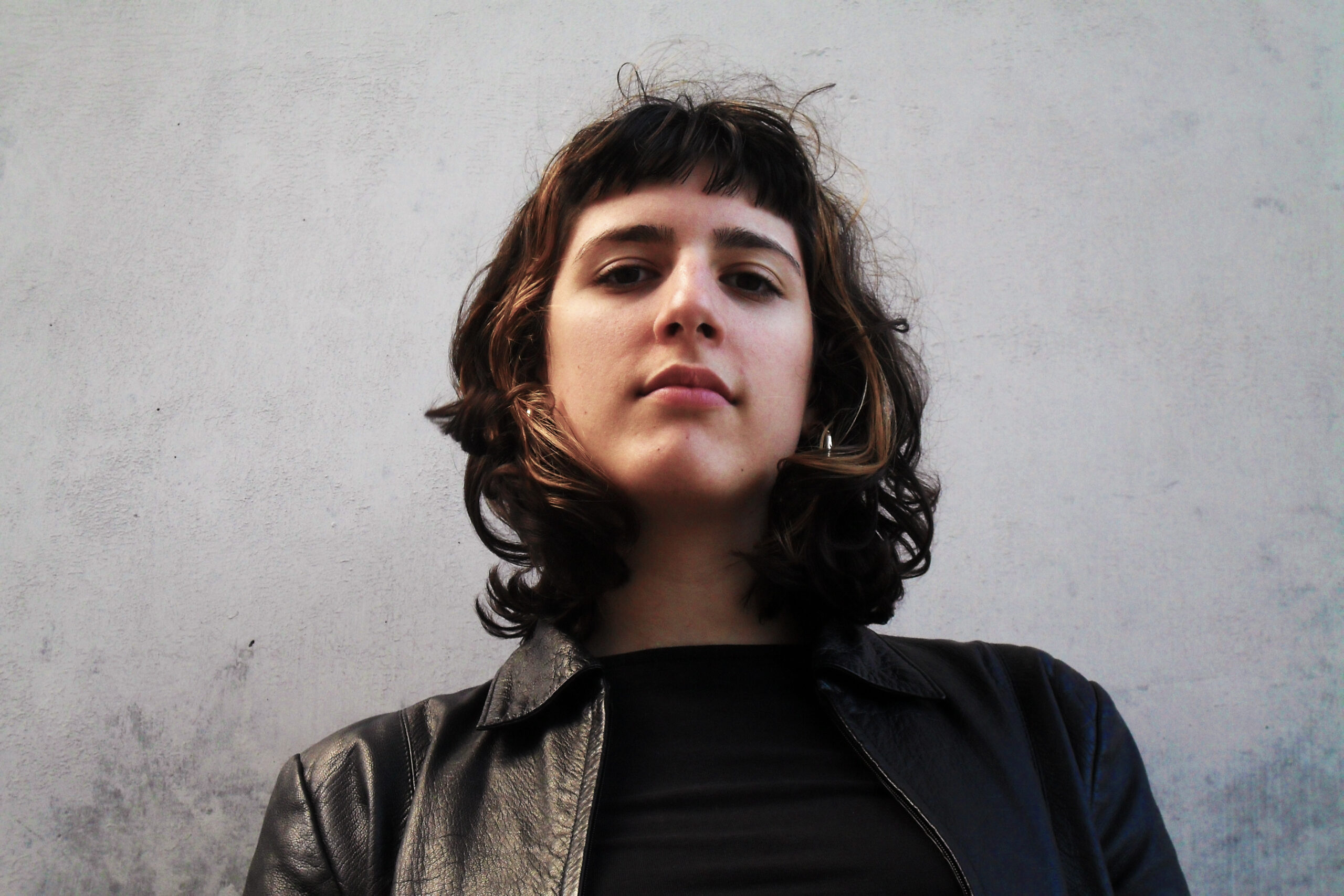
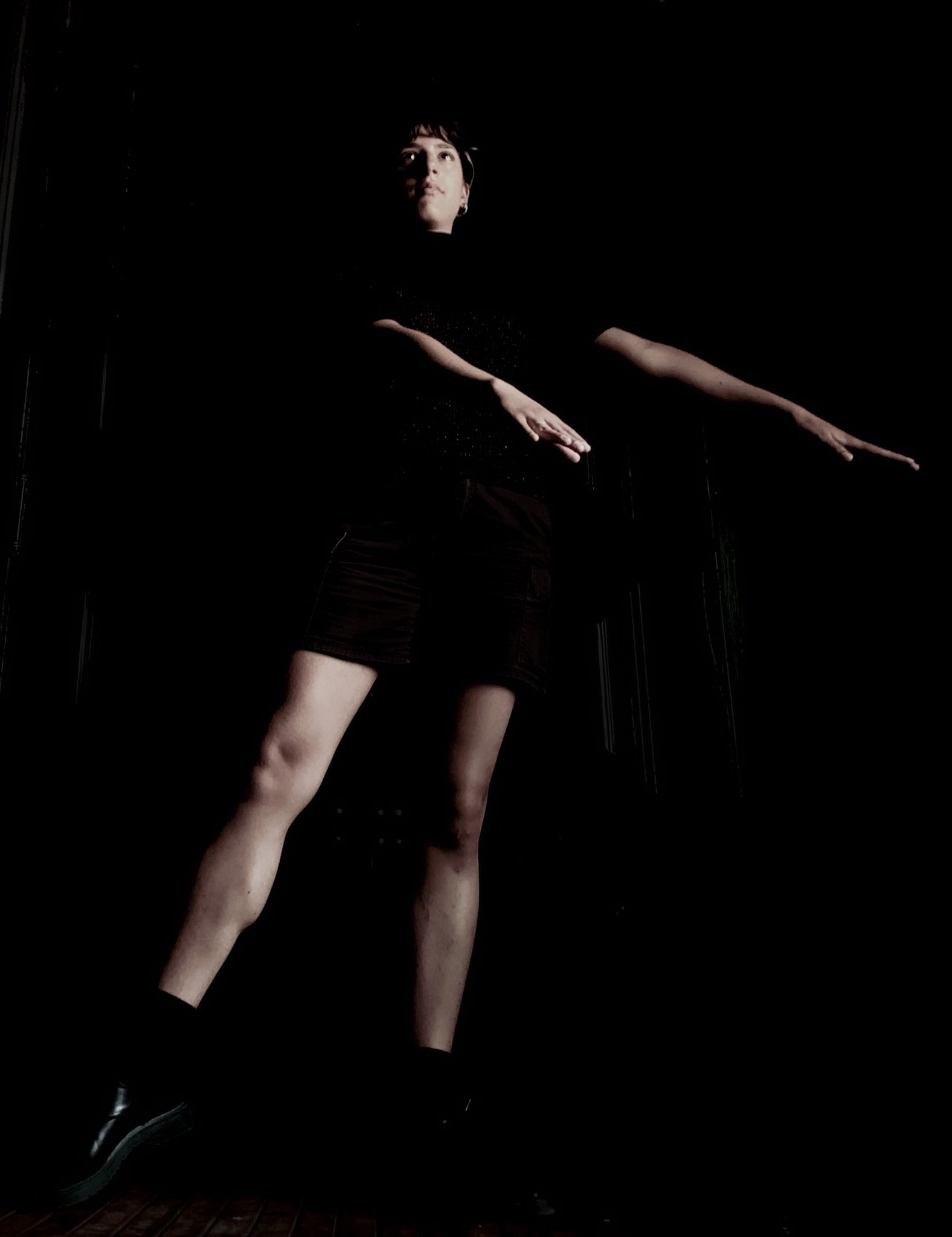
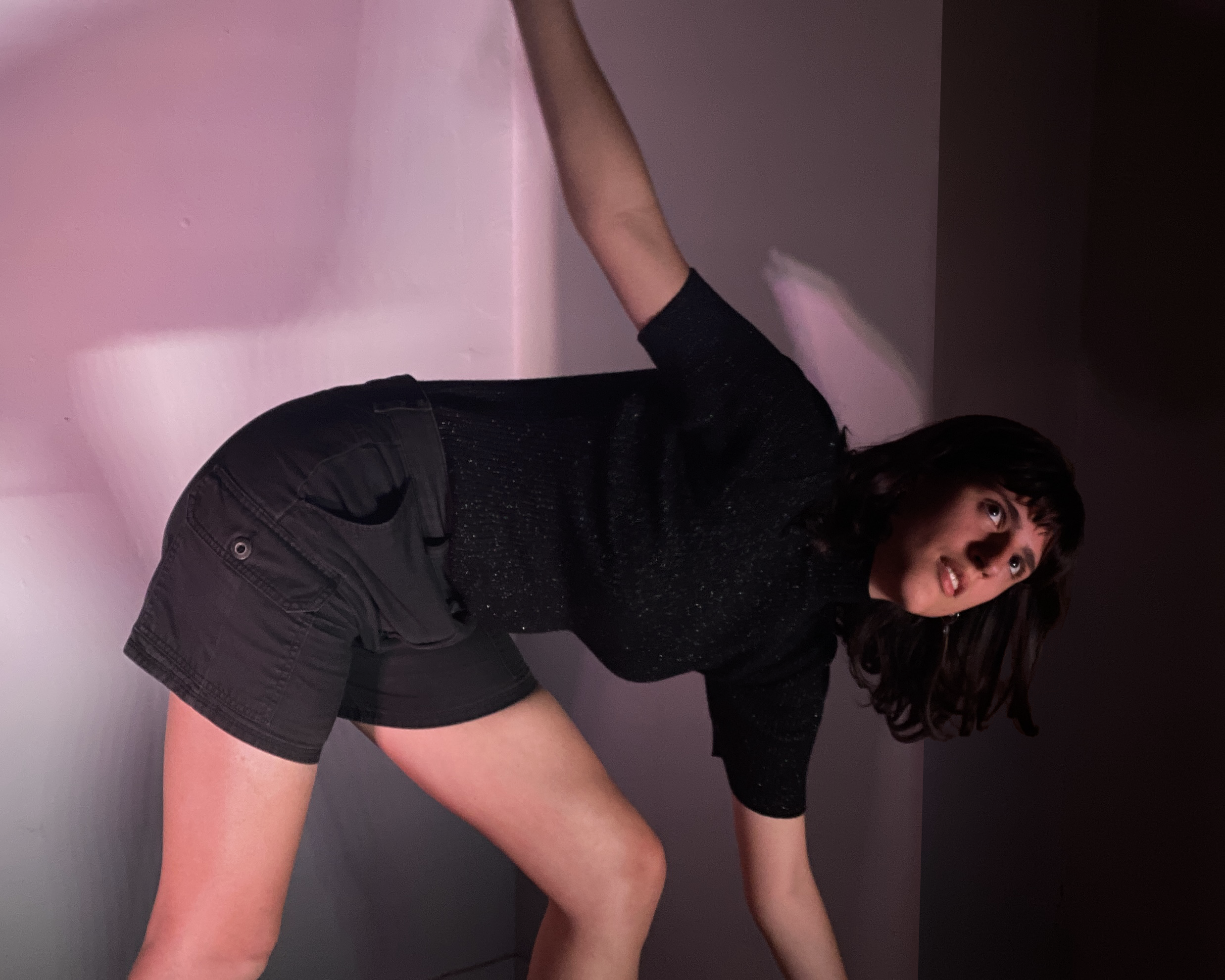
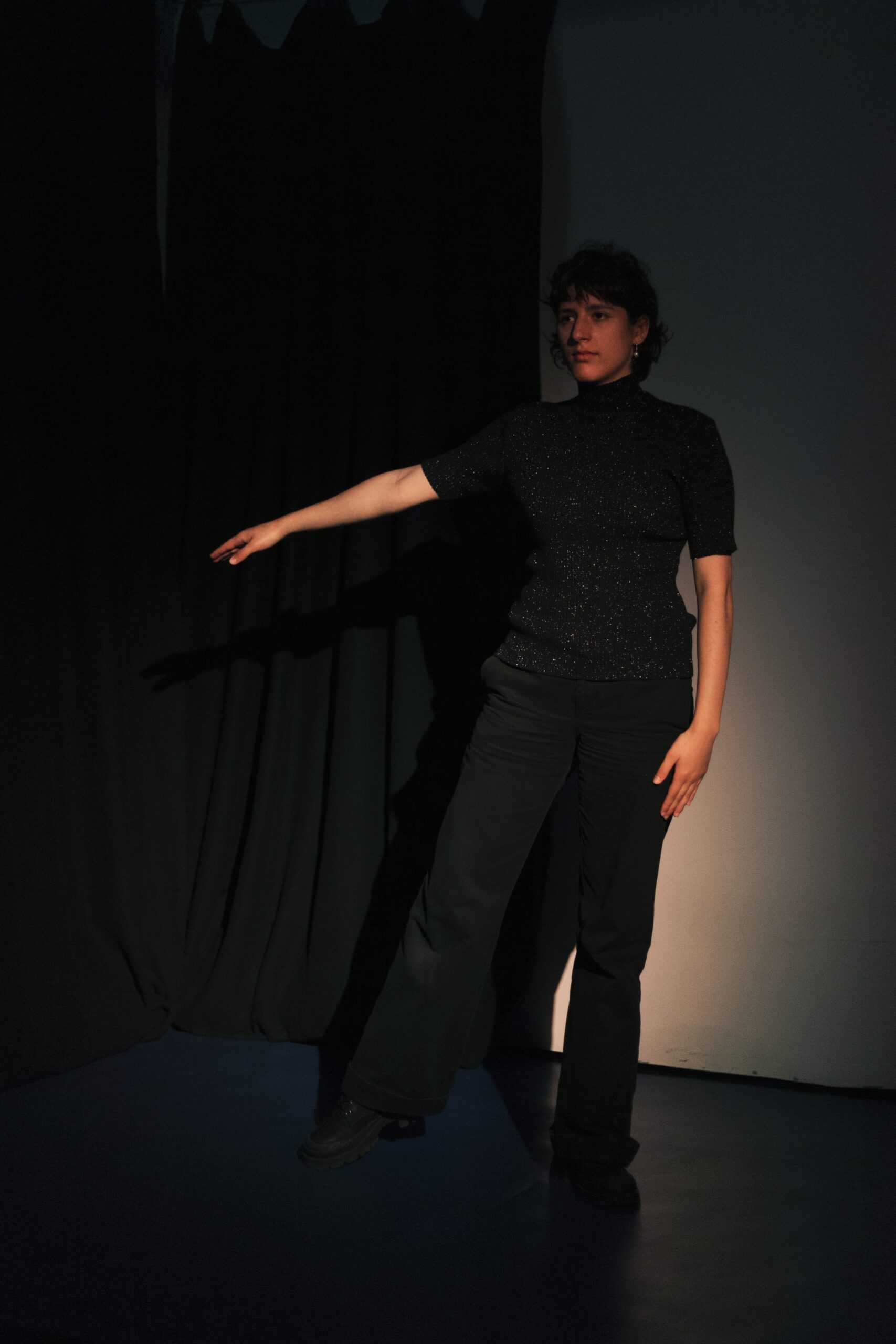
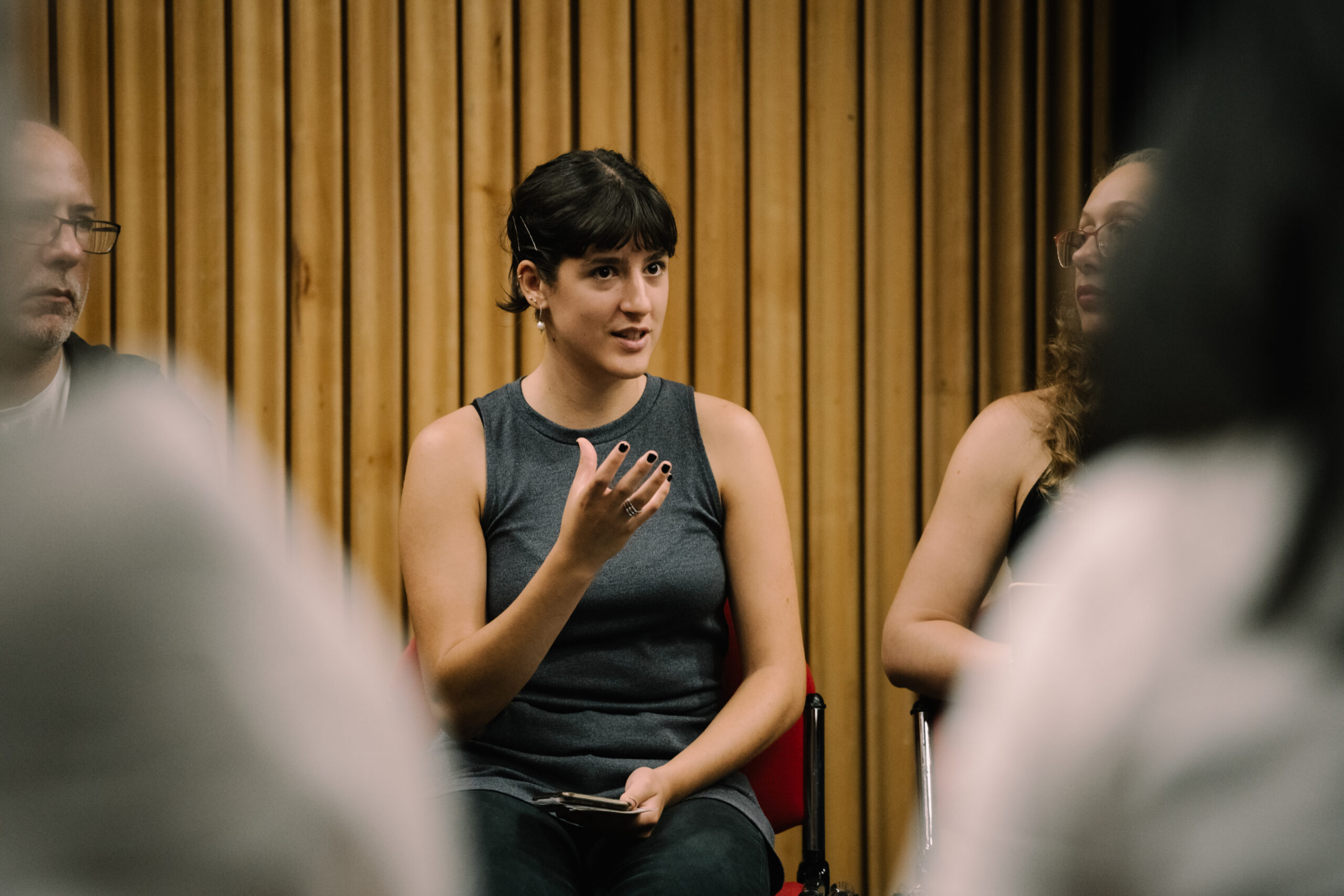
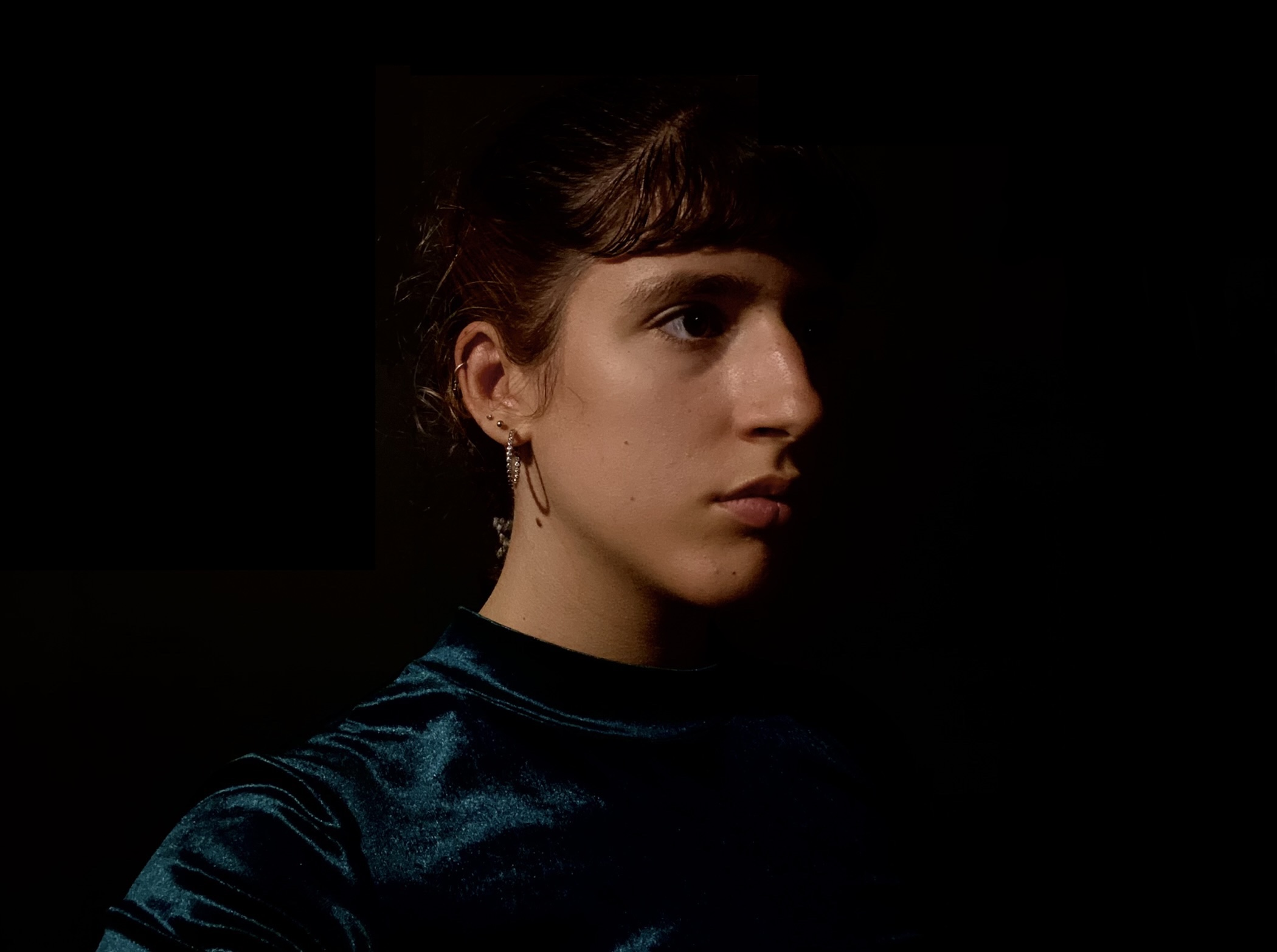
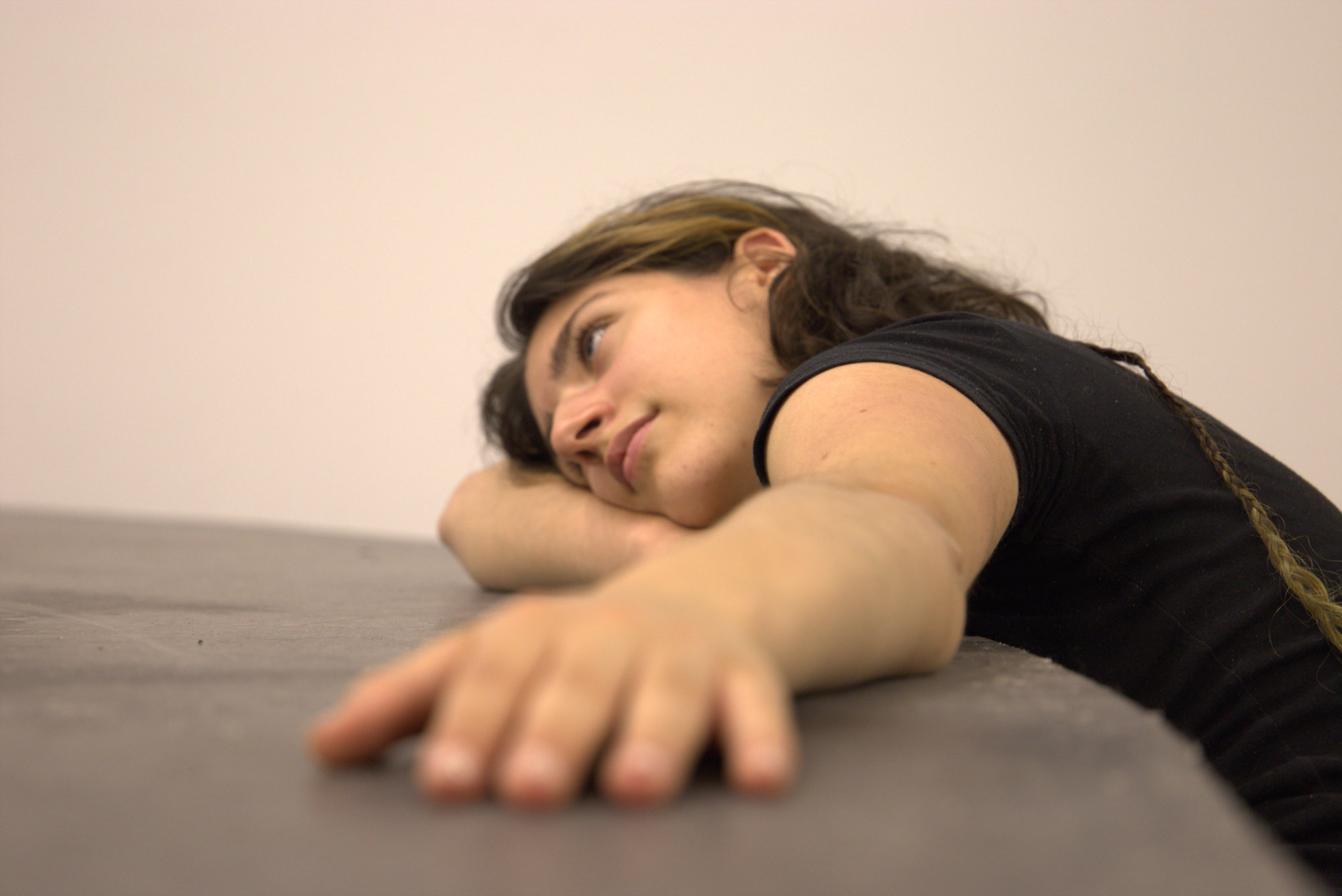
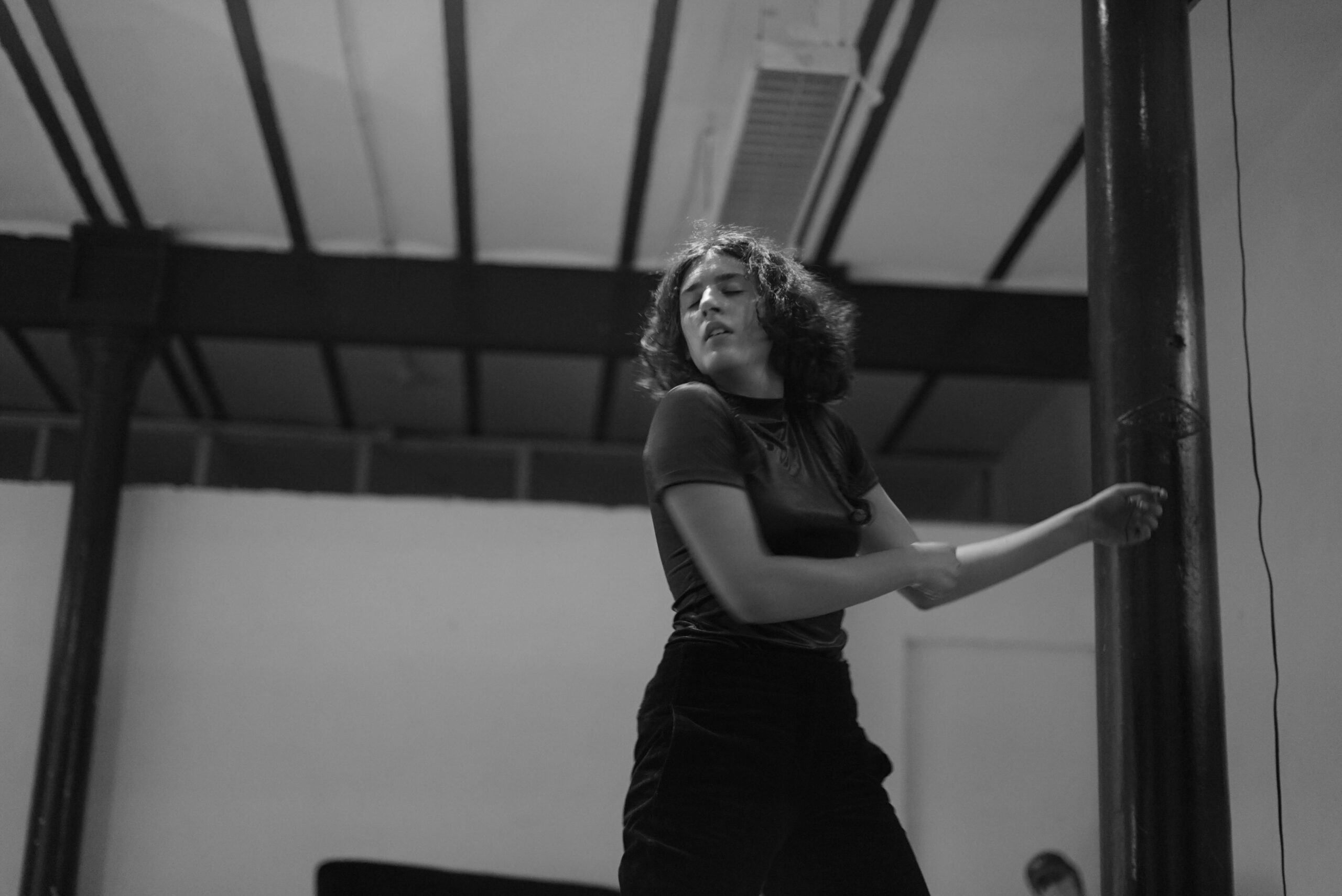
Joana Franco holds a degree in dance (2019) and a master's in choreographic creation (2023). Recently, she has focused on choreography as a field for studying bodies in motion, closer to or further from dance. Her work is characterised by a multidisciplinary practice centred on itself, where materials and devices function simultaneously as objects of interest and artistic support.
Her engagement with artistic research, along with the intersections of choreography, composition, logic, and programming, has shaped her most recent projects. Among these, Kaput!stands out, in which she developed a prototype of the “entire choreography,” exploring a synthetic conception of the body as a spatial entity.
Joana Franco é licenciada em dança (2019) e mestre em criação coreográfica e práticas profissionais (2023) pela Escola Superior de Dança. A sua prática desenvolve-se no campo da coreografia expandida, centrando-se no cruzamento entre o gráfico e o coreográfico. Neste contexto, destaca-se o projeto “Kaput!” (2023–2024), um protótipo de toda a coreografia, apresentado no formato de conferência-performance e em modo laboratório ‘coreo-gráfico’ no Centro Cultural de Alfena, na Casa Cheia, na Galeria Zé dos Bois e no Espaço Cultural das Mercês. Paralelamente, tem trabalhado em design gráfico e desenvolvimento web para projetos no setor cultural e artístico.
Ao longo do seu percurso colaborou com diversas instituições e artistas, entre os quais Lara Maia, Joaquim Leal, Francisco Miguel, Coletivo TETO, Culturgest, Estúdios Victor Córdon e Plano Nacional das Artes, para além de desenvolver trabalho de comunicação para projetos de Biloba, Duarte Ventura, Estela Alexandre, DINÂMIA’CET-Iscte e SocioDigital Lab for Public Policy.
Bio
Joana Franco completed a Bachelor’s degree in Dance (Escola Superior de Dança, 2019) and a Master’s degree in Choreographic Creation and Professional Practices, with the final project Kaput! and the dissertation Kaput! – a prototype of the entire choreography (ESD, 2023).
In the field of dance and performance creation, she is noted for her collaboration with Lara Maia on projects such as corporeal encounters (2019), xx (2021) and Pose (2022), as well as performative interactions with the exhibitions Mão-de-Obra (António Bolota at Culturgest, 2021) and Sculptured in Darkness (Hugo Canoilas at Fundação Calouste Gulbenkian, 2022).
Driven by an interest in artistic research, she authored an article on the work of the collective TETO, published in RIACT No. 5 (2022), and participated in the projects Choreographic Creation – Process, Documentation and Analysis (Instituto Politécnico de Lisboa, 2022) and Ghost Dance: A methodology to analyse dance movement in interaction with virtual reality (CICANT – Universidade Lusófona, INET-md, 2024).
At the intersection of choreography, design, and digital technologies, she developed Kaput! (choreo-graphic lab) (2024), an exhibition of interactive choreographic objects; Pocket Choreographies — dance it yourself (2001), a tool for the random generation of choreographies; and dance in limbo: the hybrid body (2020), a VR experience for dance improvisation.
She collaborated with Culturgest in the design of participatory projects such as Bal Moderne (2023), What Is the Future of the Cultural Institution? (2023) and Tempestade Mental (2024). Her involvement in this area began as a participant in the projects ENTRAR (Culturgest, 2020-2021) and Mutantes (BoCA – Bienal de Artes Contemporâneas, 2022). Em 2025, foi acolhida como Artista Residente no Agrupamento de Escolas Fernando Namora, em parceria com o Plano Nacional das Artes.
In addition, she works in communication design and web development for the cultural sector. She is the author of album covers for musical projects by António Carvalho, Biloba, Duarte Ventura and Estela Alexandre. She frequently collaborates with research units at ISCTE – University Institute of Lisbon on communication materials for projects and events.
Photos