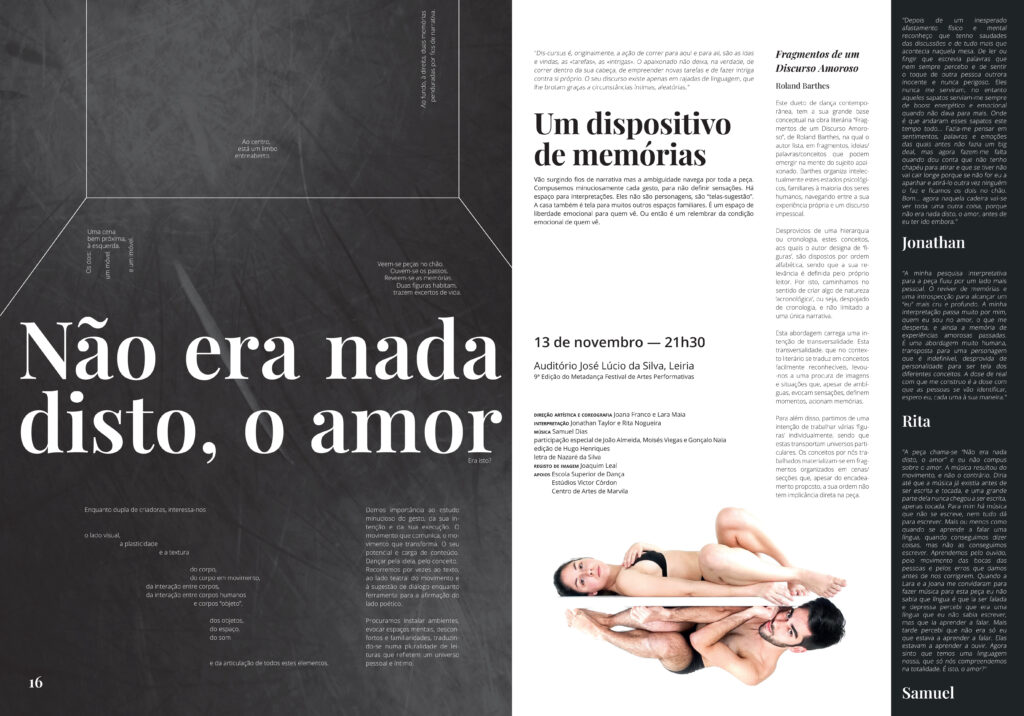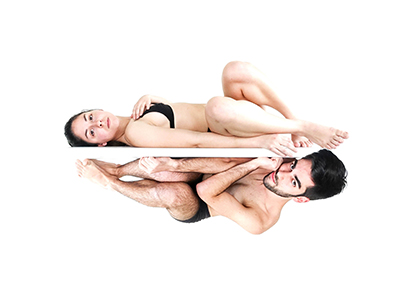
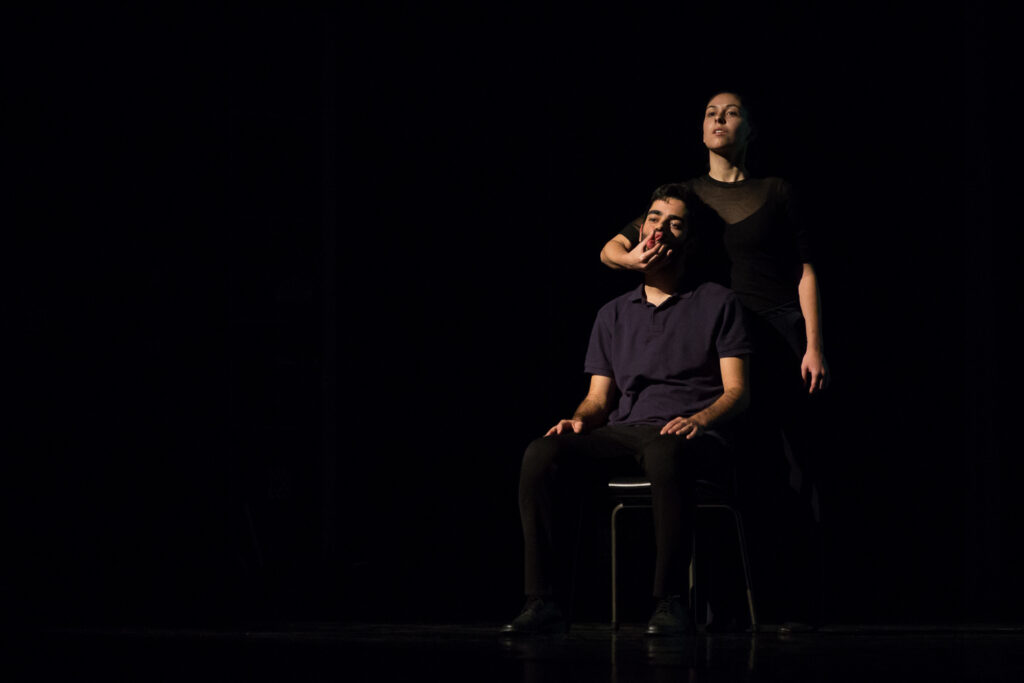
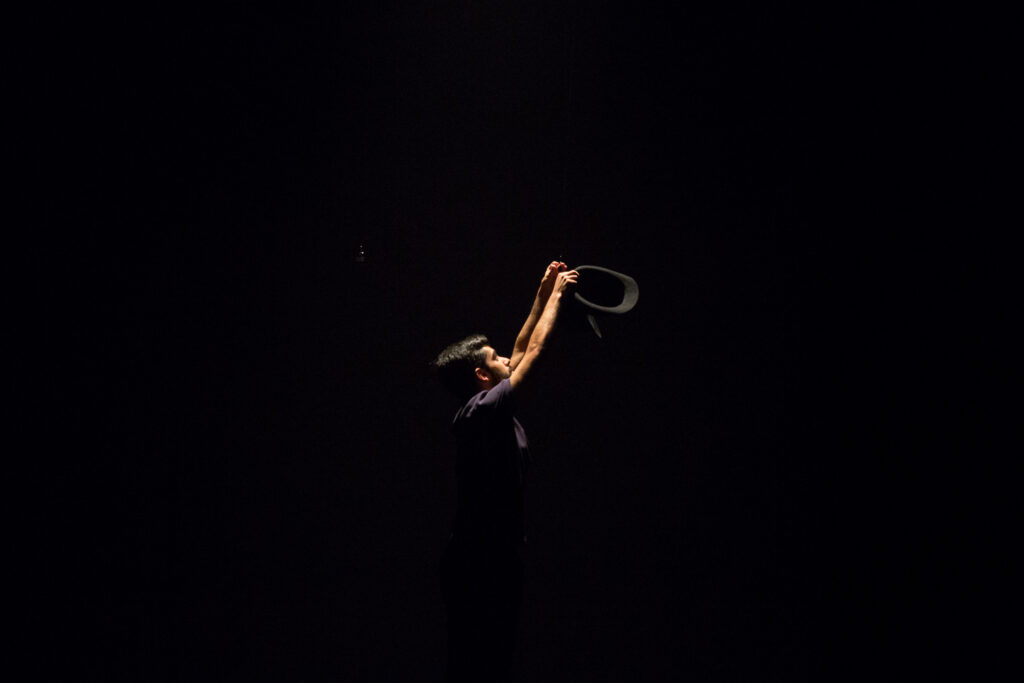
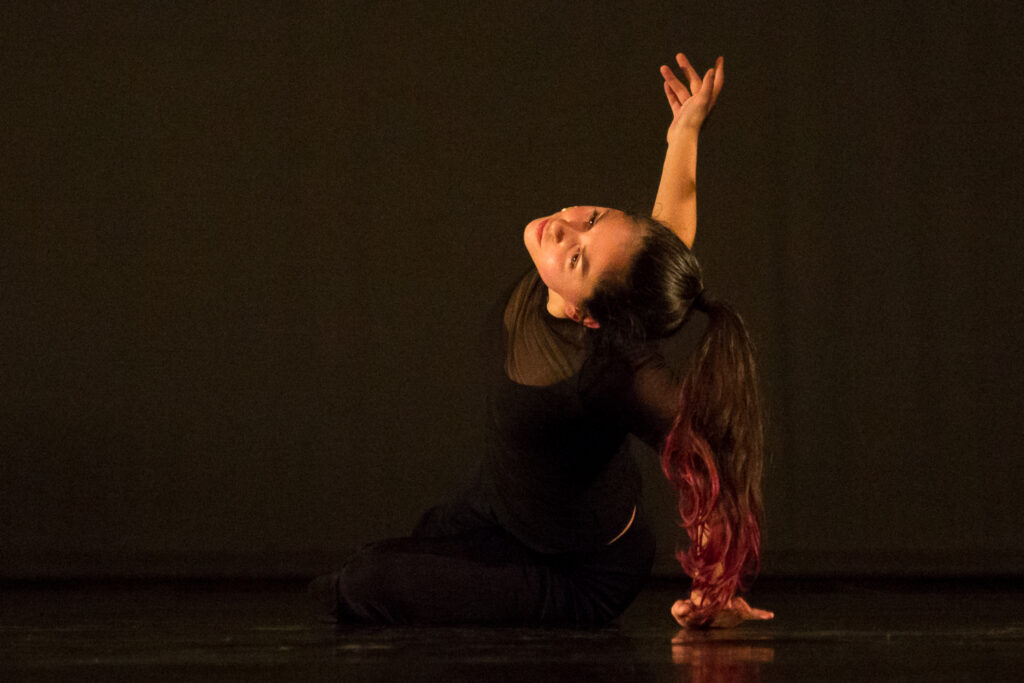
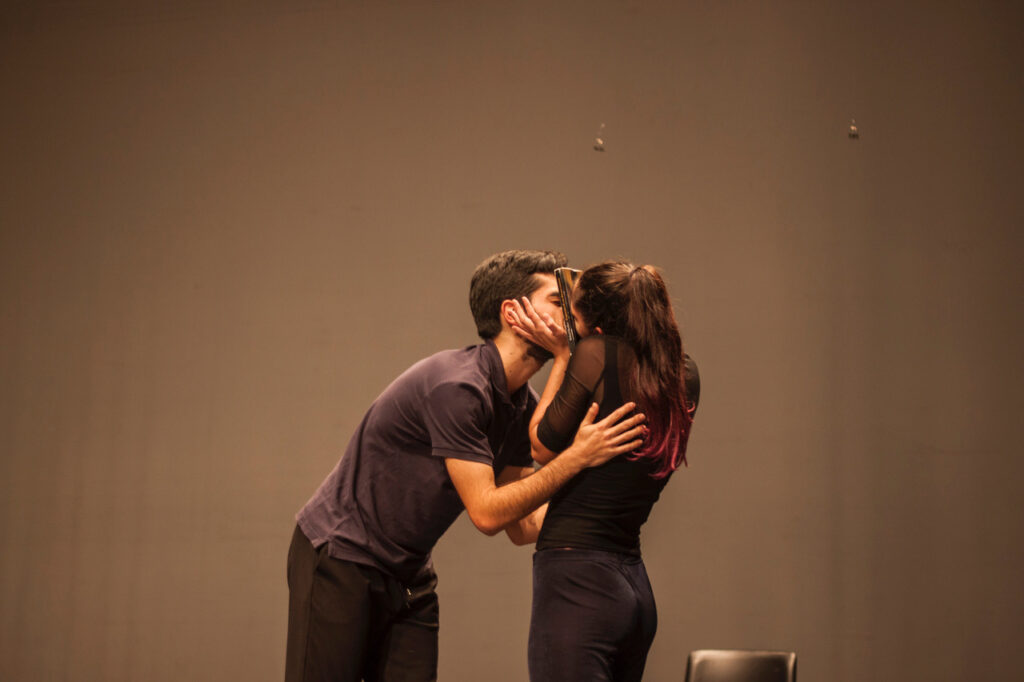
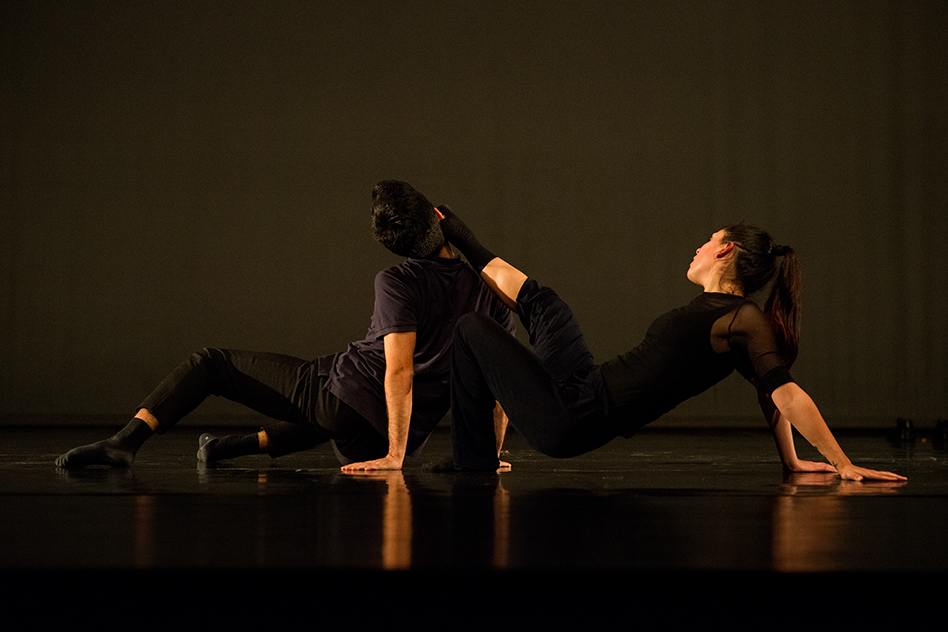
The duet Love was nothing like this is conceptually rooted in Roland Barthes’ literary work “A Lover’s Discourse: Fragments”. In this book, Barthes presents a series of fragmented ideas, words, and concepts that may arise in the mind of someone in love. He intellectually organises these psychological states (familiar to most humans), moving fluidly between personal experience and an impersonal discourse. While the emotions portrayed are instantly recognisable to the reader, the questions raised lead us back to the core of the subject: If love is a universal experience, can a common emotional language exist? Does this ‘common emotional language’ truly exist?
Without hierarchy or chronology, these concepts (referred to by Barthes as ‘figures’) are arranged alphabetically, with their significance defined by the reader. Inspired by this, we sought to create something of an ‘achronological’ nature, devoid of linearity and unrestricted by a single narrative. This approach carries an intention of transversality. In literature, this universality translates into easily recognisable concepts; in our work, it led us to explore images and situations that, while ambiguous, evoke sensations, define moments, and trigger memories. Additionally, we set out to work with various ‘figures’ individually, each carrying its own unique universe. The concepts we explored materialise as fragments structured into scenes-sections. Despite the proposed sequence, their order does not directly impact the piece as a whole.
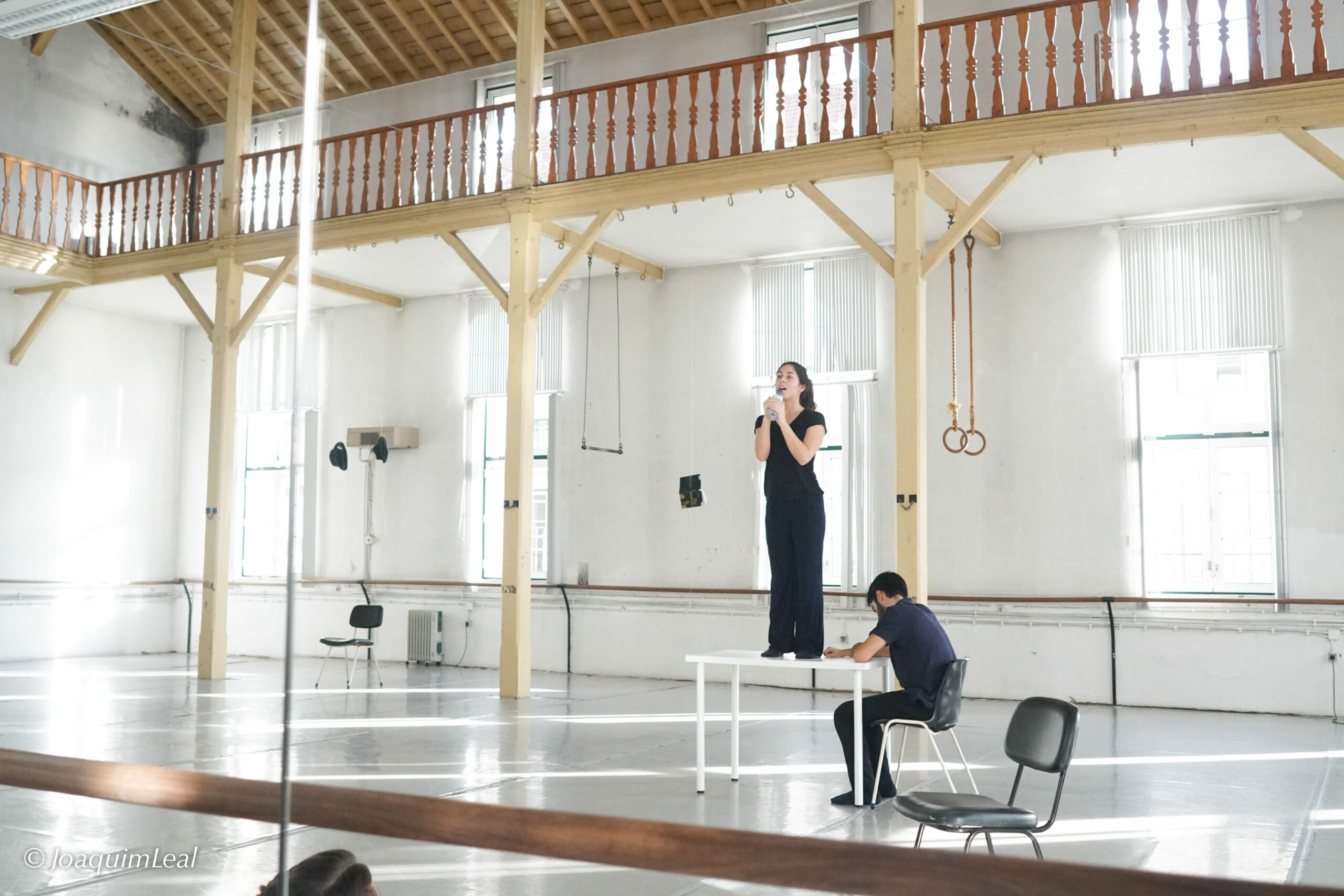

They asked me for a moment. I blushed.
To write stories by best year, something that the years have kept.
But, and when (l)only, alone, I swear! It was a memory of you.
I see through simple, selfish celebrations, experiences so dear, that because they feel mine, the curious came to watch me share.
I remember the smiling shape. I dreamed of another head. It was you who was missing.
I said: I cried for you, and having said it, I smiled.
Ah! If only you were…
I know, I’ve always regretted. I distanced past experiences. Afterwards, I witnessed a lot of another of this relationship. I had one always, never the happy one.
What to do? A dinner inside. I asked: I want it now! Thanks.
I like being able of loneliness but she absorbs me. Inevitable front. There, strangers, we met again.
It just happened to turn out beautiful like this.
Poem composed by Joana and Lara, based on scrambled words from a text written by Jonathan.